


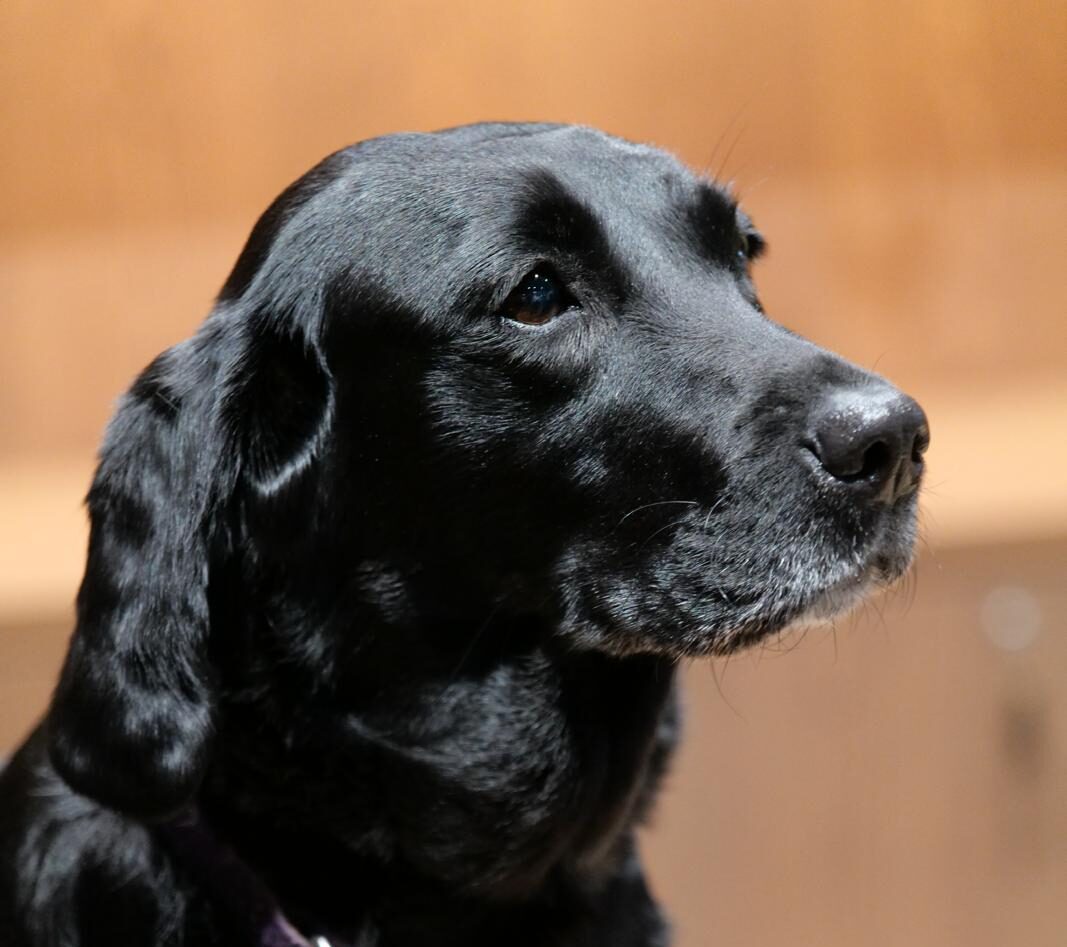
Dogs live in a completely different sensory world to us, and it is fascinating once you understand it. We recently ran an event, A Dog’s Eye View – with the lovely Katrina Williams from Dogworthy Dog Training, where she gave us an insider look at how dogs experience life – but not the way we imagine they do! Suddenly, all those moments when your dog freezes mid-walk, stares at a bush like it owes them money, or lifts its ears like tiny satellite dishes start to make sense. Dogs are not being dramatic or mischievous. They are interpreting the world in ways we can barely imagine. Understanding their senses can make everyday life easier and more enjoyable for both you and your dog!
How Dogs Hear
Dogs have extraordinary hearing. They can detect sounds up to 60,000 Hertz, far beyond human limits. Their ears swivel and tilt, constantly scanning their surroundings. This means dogs often react to things long before we even notice them. While you are strolling along, your dog may have already detected:
- A fox in the distance
- A cyclist speeding by
- A delivery van
- Someone microwaving three doors down
One simple example from Katrina illustrated this. If you drop a marble and a sausage at the same time, many dogs will look at the marble first. Not because they have given up on sausages (far from it – how can they give up on the wonderful smell of a sausage?), but because the marble makes a sharp clink that grabs their attention instantly. Their ears react faster than their noses, which shows just how sensitive their hearing is. When your dog seems jumpy or alert for no reason, it is probably reacting to sounds you will never notice.

How Dogs Smell
If dogs’ ears are impressive, their noses are superpowered. Dogs have around 300 million scent receptors, compared to humans who have just 5 or 6 million. Their brains devote a huge portion of processing power to interpreting smells, which is why your dog can sniff a lamppost for what feels like forever and still appear completely absorbed.
When a dog sniffs, it is gathering detailed information. Dogs can tell:
- Who passed by
- How long ago
- Their mood and health
- Which direction they walked
A single patch of grass contains more information than an entire community Facebook group. This is why letting your dog sniff during walks is not misbehaviour. It is mental enrichment. Sniffing keeps dogs mentally active, reduces anxiety, and allows them to interact with their environment in a deeply satisfying way.
This is particularly true as dogs get older, when they cannot move as fast as they may have been used to. Bailey, in her golden years with us, would love gentle sniffy stroll around the block- which could take 25 minutes long – but that provided enough stimulation for her for the rest of the day!

How Dogs See
Dogs see the world differently than humans. They mainly perceive blues, yellows and greys, so that bright red toy you bought them probably looks like a dull grey blob. But where dogs may lack colour perception, they more than make up for it in other areas. They excel at detecting movement, even from long distances, and their night vision is far superior to ours because of reflective layers in their eyes.

Dogs also have a wider field of view, around 240 degrees compared to our 180 degrees, allowing them to notice more of what is happening around them. Did you know this is why Muddy Barkers vending machines are blue and yellow – the colours dogs see best, making them easy to spot during walks! Combined with hearing and smell, their vision gives dogs a rich and layered understanding of the world.
We have always wondered how our Boston terrier, Luna could spot balls being thrown in all directions, and yet still catch them! This 240-degree vision sometimes made us think she could see out of the back of her head!

Breed Differences and What They Mean
Have you ever wondered about where your dog’s eye/ears placement are, and why they are so unique? Different dog breeds were developed for specific jobs, and their senses reflect this:
- Scent hounds like Beagles and Bloodhounds have long snouts and floppy ears, making them excellent tracking dogs.
- Sight hounds like Greyhounds and Whippets have wide-set eyes for nearly panoramic vision, perfect for spotting movement.
- Working breeds like German Shepherds and Rottweilers have balanced senses, ideal for guarding and focusing.
- Terriers have strong close-range scenting and fast reactions.
- Pugs and Bulldogs have shorter noses but wide-set eyes for good near-range vision.
- Retrievers combine excellent scenting and sight abilities, helping them excel at fetch and tracking games.
Knowing these differences helps you provide the right activities and enrichment, keeping your dog happy, healthy, and mentally stimulated.
Conclusion
Dogs do not just live in our world. They interpret it through their incredible senses. Their noses, ears, and eyes create a richer, more layered picture of life than most people realise. Paying attention to how your dog experiences the world makes walks, training, and bonding easier and far more meaningful.
Seeing the world through your dog’s eyes, ears, and nose can transform the way you interact with them. You will understand their reactions, appreciate their unique abilities, and even anticipate their needs better. If you do all this while keeping a few treats handy, you will be the owner they have always imagined, the perfect companion in their vibrant, sensory-rich world.


